Why I Love Godzilla
Or, Why a Grown-Ass Man Enjoys Men in Rubber Suits Smashing Model Cities

Anyone who knows me, knows I love Godzilla. Cue Blue Oyster Cult.
I vividly remember the first time I saw him. When I was about ten or eleven I spent afternoons at my cousin Ree’s house until both my father and mother got off work. Like everyone in my small town, Ree only got three TV channels, four if you counted PBS (but no one did). And one, I believe WREG out of Memphis, showed the original Godzilla one afternoon.
I say original, but of course I meant Godzilla, King of the Monsters, the Americanized version that rather cleverly inserted new scenes with Raymond Burr into the Japanese original Gojira. Yes, it’s worse that way, but not worse than Godzilla vs. Gigan. Anyway, I knew Raymond Burr from reruns of Perry Mason, where he was trustworthiness incarnate, so when I saw him here, I was instantly convinced of the seriousness of the monster looming over Tokyo.
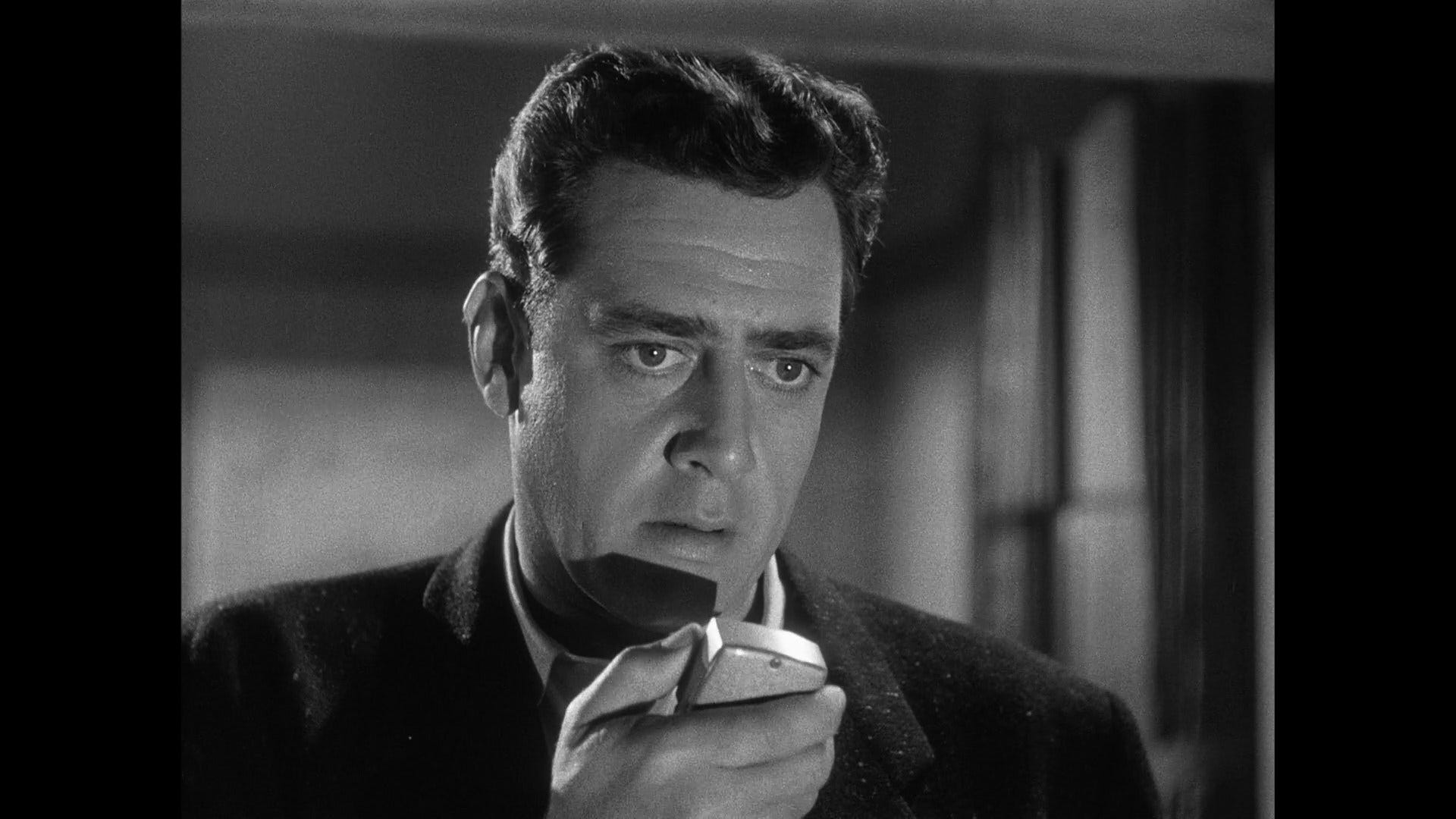
And even at that tender age, I knew about Godzilla from the pages of Famous Monsters of Filmland. But since it was way, way before any form of home media, I’d just never stumbled across any of the films before. And on this one, I came in during the climactic raid on Tokyo, after which the film winds down. But the way Burr intones, “Nothing can save the city now,” remained on permanent loop in my brain ever since.
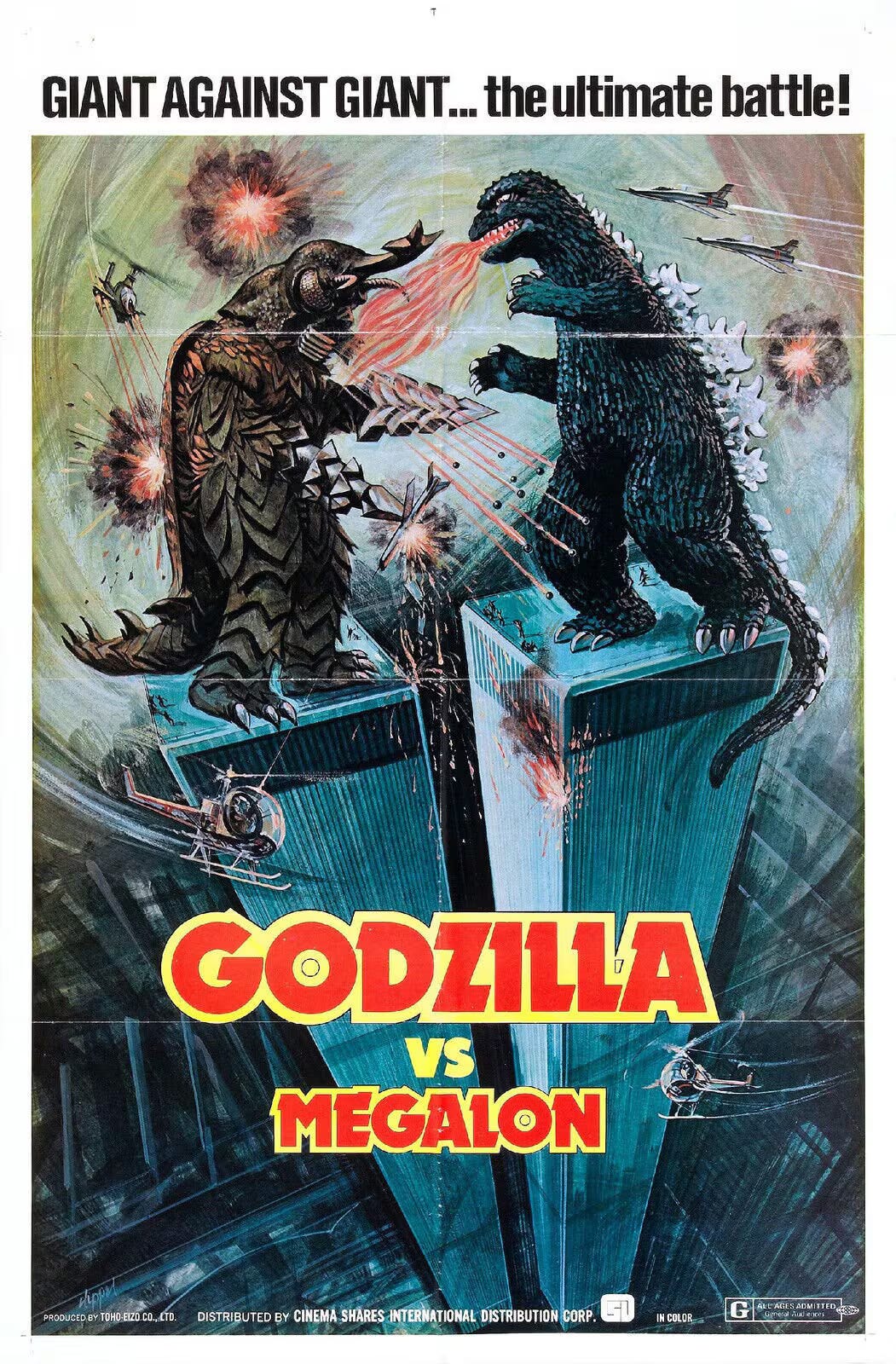
Flash forward a few years, to the US theatrical release of Godzilla vs Megalon in 1977 the first one I saw on its original theatrical release. There are debates about the worst Godzilla movie—All Monsters Attack gets a lot of votes—but Megalon is definitely toward the bottom of the barrel. Stock footage from other movies, tattered costumes, a ridiculous Ultraman ripoff called Jet Jaguar, and the hairy-shouldered King of Seatopia (played by Robert Dunham, an American who lived in Japan and shows up in a lot of vintage SF and kaiju films) indicate that this was put together in a hurry, with little care, and aimed at the children’s audience.
On the poster, mimicking the famous poster of the remake of King Kong, Godzilla and Megalon each stand on one of the World Trade Center towers. This, needless to say, is not in the movie. As in all the later Showa films, Godzilla and his opponents battle in a big open field, much cheaper and easier to construct than city miniatures.
And that battle…man. Easily the most famous, or infamous, moment is when Godzilla slides on his tail to do a drop kick, which actually got cheers from the mostly-kid audience when I saw it. Face it: a bunch of hick kids from Tennessee, easy to please and appreciative of anything that wasn’t Disney, were the perfect audience. But that doesn’t change the fact that we were very, very far from Ishiro Honda’s somber, dead-serious original.
So if these are the two extremes…why do I still care? Why do I get excited at news of a new Godzilla film in the works?
I’ve put a lot of thought into that over the years, particularly when people have looked down their noses at me for my continued fandom. Not that it affected me; I was an SF fan before Star Wars made it cool, so I’ve been mocked, beaten up, harassed and ostracized. Mere disdain can’t touch me.
But these disdainers had a point. Why hadn’t I outgrown men in rubber suits stomping model cities? What’s in that for an adult?
When I reviewed Roland Emmerich’s American Godzilla (the one with Matthew Broderick) for the old Nashville CitySearch website, I observed that, in making Godzilla simply a big lizard*, they’d gotten the size right but not the scale. And I think that’s the crucial element of Godzilla’s appeal: the scale. Not just physically, but metaphorically.
When he’s done right, Godzilla is, as a character says in Shin Godzilla, a god incarnate. He’s unstoppable. Man’s weapons have no effect on him. He can’t be overpowered, he has to be outsmarted. Things like the oxygen destroyer, freezing blood coagulant, and other things that humanity can conceive.
And of course Godzilla is a metaphor: first for the atomic bomb, then for the power of nature, the lost souls of the Pacific war crying out for revenge, and most recently, back to the atomic bomb in Godzilla Minus One. When he’s not a metaphor, as in the Emmerich film, he has size but no scale. He’s just a big lizard.
That scale is what, I think, holds the appeal for adults. Certainly Shin Godzilla and Godzilla Minus One are aimed at adults; the issues are serious, grim, and overpowering.
(BTW, I’m deliberately ignoring the current Legendary Films series. All of them are fun, some of them are quite good [Kong: Skull Island, for example] but none of them attempt to be more than what they are: state-of-the-art CGI monster movies.)
So if you’re not a fan, but you’re G-curious, here are five recommendations:
Gojira (the original Japanese version) (1954)
Mothra vs Godzilla (1964)
Godzilla, Mothra, King Ghidorah: Giant Monsters All-Out Attack (2001)
Shin Godzilla (2016)
Godzilla Minus One (2023)
And always remember: history shows again and again how nature points up the folly of maaaaan…
*as artist Andrew Barr (https://www.apb-art.com/) pointed out on Threads, this actually works much better as a remake of The Beast from 20,000 Fathoms, which was the inspiration for the original Gojira.
I watched all the monster movies that came on on Saturday afternoon. A Godzilla movie I hadn't seen yet was always a treat.